
Perci vs. ChatGPT
Perci vs. ChatGPT: the copy was never the hard part
Last checked: August 2026
If you are writing Amazon listings with ChatGPT, you are doing the right thing. AI writes good listing copy. That problem is solved, it is free, and no tool should charge you for it.
This page is about everything that happens after the copy, and about the specific point where doing it yourself stops being worth the hours.
Perci and ChatGPT at a glance
| Listing task | ChatGPT alone | Perci |
|---|---|---|
| Listing copy | Writes and revises copy from the information you provide | Generates listing copy within the listing workflow |
| Keyword research | Can analyze data you provide; does not supply Amazon search-volume data by itself | Uses Amazon keyword and competitor data in the listing workflow |
| Category attributes | Can suggest fields, but you must verify them against Amazon's category template | Reads Amazon's category schema and helps complete attributes across the catalog |
| Restricted phrases | Can follow a policy list you provide | Checks against Perci's maintained restricted- and caution-phrase bank |
| Variation families | You coordinate parent and child listings manually | Keeps related listings consistent across a variation family |
| Publishing | Requires a separate Amazon-specific integration and workflow | Publishes approved listings through the Amazon API and confirms changes landed |
| Catalog scale | Manual process repeated for each listing | Built for bulk listing production |
ChatGPT is a capable copy tool. Perci addresses the Amazon data, validation, and publishing work around that copy.
Section 1
What's actually left after the copy
Writing the title, bullets, and description is one part of publishing an optimized listing. Here is the rest, for every ASIN:
- Pull the listing's current content and backend data.
- Research competitors and Amazon keywords for that product.
- Find the exact attribute fields Amazon expects for its product type.
- Find accepted, truthful values for those fields.
- Check the copy against Amazon restricted and caution phrases.
- Structure variation families so parents and children stay consistent.
- Publish everything to Amazon and confirm it landed.
None of that is writing. All of it is per-ASIN. A general AI tool helps with roughly one item on that list unless you build and maintain the surrounding data connections yourself.
Section 2
Where ChatGPT specifically breaks
Most of these are not cases where ChatGPT is simply worse. They are cases where the answer depends on external Amazon data. Without that data connected, ChatGPT can still answer, but it cannot derive the missing numbers from language alone.
It doesn't have keyword data, so it invents keywords
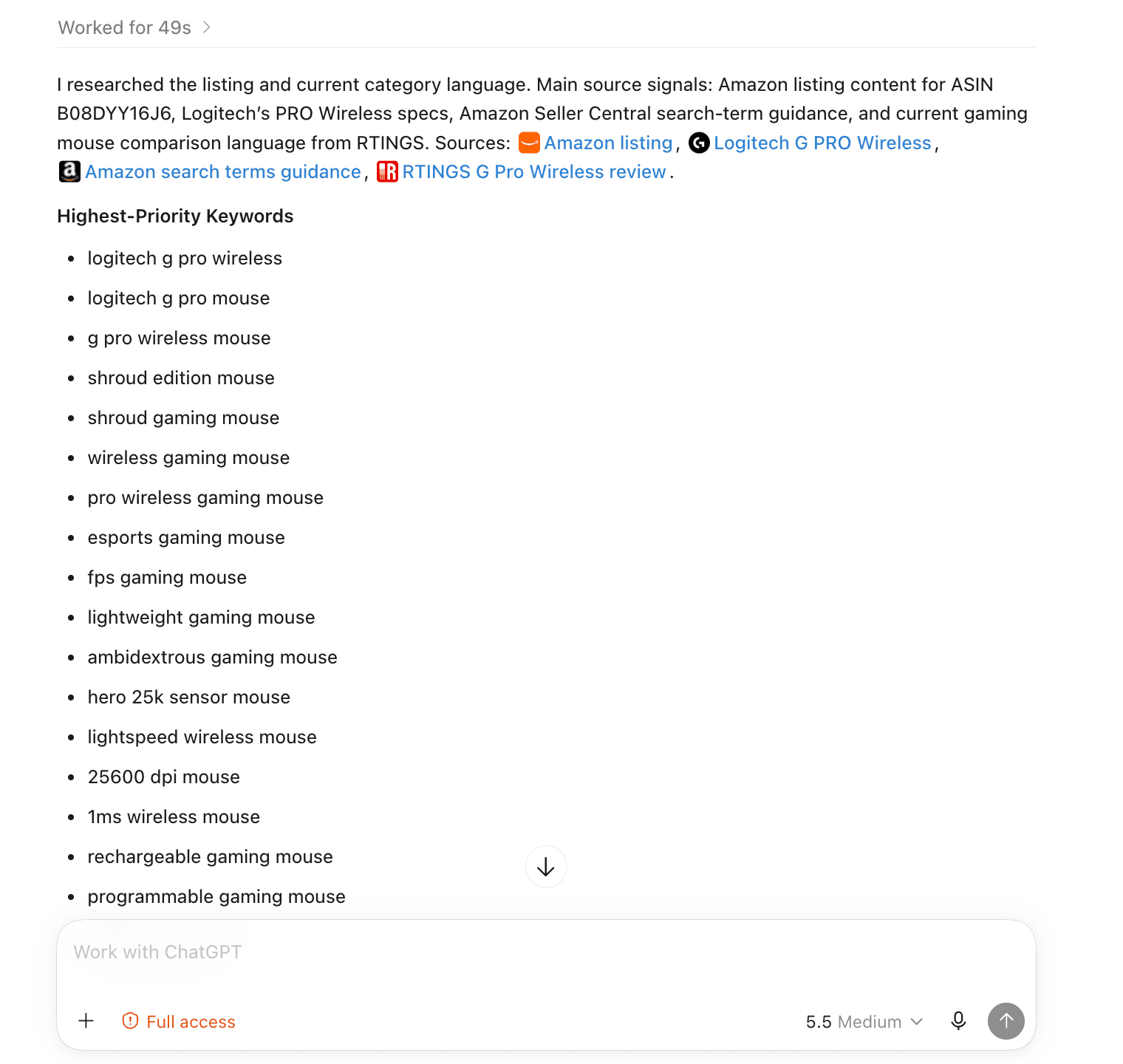
Ask ChatGPT for target keywords without providing Amazon data and it returns a clean, confident, plausible list. It is not derived from search volume, your Search Query Performance report, or what competitors rank for. It is a language model producing words that sound like what Amazon shoppers might type.
View the exact prompt used for this test
Research keywords for this Amazon listing:
US ASIN B08DYY16J6
Title: Logitech G Pro Wireless Gaming Mouse - Shroud Edition
Bullets:
About this item
Play like legendary sharpshooter Shroud with the new PRO Series - Shroud edition, featuring an exclusive new design.
Designed with pros and engineered to win, the G Pro Wireless Gaming Mouse is the result of two years of work with professional esports gamers, combining advanced technologies in an ultra-lightweight design.
Light-speed Wireless: Pro grade performance overcomes the traditional limitations of wireless latency, connectivity and power to deliver a rock solid, super-fast 1 millisecond report rate connection
Hero 25K sensor through a software update from G HUB, this upgrade is free to all players: Our most advanced, with 1:1 tracking, 400+ ips, and 100 - 25,600 max dpi sensitivity plus zero smoothing, filtering, or acceleration
Ultra lightweight: Innovative endoskeleton design creates a super thin yet incredibly strong outer shell, enabling the body to weigh in at a remarkably light and maneuverable 80 grams.
Note: In case of Wireless mouse, the USB receiver will be provided inside or along with the mouse
Description:
Designed over two years with direct input from many professional esports players, Logitech G PRO Wireless Gaming Mouse is built to the exacting standards of some of the world's top esports professionals. PRO Wireless gaming mouse is purpose built for extreme performance and includes the latest and most advanced technologies available. Featuring Lightspeed technology, PRO Wireless overcomes the limitations of latency, connectivity and power to provide rock solid and super-fast 1 mms report rate connection. PRO Wireless gaming mouse is also equipped with the next generation version of the HERO sensor. HERO 16K is the highest performing and most power efficient gaming sensor that Logitech has ever made for pixel precise targeting in fps and mob games. An incredibly lightweight endoskeleton and ergonomic design improve maneuverability and comfort while removable side buttons and programmable LIGHTSYNC RGB lighting give you the ultimate in mouse customization.
Twenty-five of the 36 keywords had zero U.S. Amazon search volume in Jungle Scout data collected on August 11, 2026. On the long-tail list, 15 of 18 were zero, including claw grip wireless gaming mouse, ultra lightweight mouse 80g, 1ms wireless mouse, and hero 25k sensor mouse. They are accurate product descriptions that shoppers were not searching in the measured dataset.
It did get some right. In Jungle Scout's U.S. marketplace data, lightweight gaming mouse had 7,004 monthly searches, ambidextrous gaming mouse had 1,246, rechargeable gaming mouse had 1,004, and rgb gaming mouse had 1,400. The list was not fiction. It was roughly 31% real.
Nothing in the output identified which 31%. Every term arrived with the same confidence and formatting. About 84% of the usable volume came from wireless gaming mouse, a broad term with 82,261 monthly searches. The full list returned about 97,850 in combined monthly volume; remove that one term and the rest represented roughly 15,600 between them.
GPT-5.5 prompt run · August 6, 2026 · Jungle Scout U.S. volumes collected August 11
25 of 36 suggestions had zero monthly search volume
Highest-priority keywords
Monthly searches
logitech g pro wireless
1,943
logitech g pro mouse
740
g pro wireless mouse
0
shroud edition mouse
0
shroud gaming mouse
0
wireless gaming mouse
82,261
pro wireless gaming mouse
0
esports gaming mouse
0
fps gaming mouse
450
lightweight gaming mouse
7,004
ambidextrous gaming mouse
1,246
hero 25k sensor mouse
0
lightspeed wireless mouse
0
25600 dpi mouse
0
1ms wireless mouse
0
rechargeable gaming mouse
1,004
programmable gaming mouse
0
rgb gaming mouse
1,400
Long-tail keywords
Monthly searches
logitech g pro wireless shroud edition
0
logitech g pro wireless gaming mouse
527
wireless mouse for fps games
0
lightweight wireless mouse for gaming
0
esports mouse for competitive gaming
0
ambidextrous wireless gaming mouse
0
rechargeable wireless gaming mouse for pc
0
gaming mouse with programmable buttons
450
high dpi wireless gaming mouse
0
low latency wireless gaming mouse
0
optical sensor gaming mouse
0
pc gaming mouse wireless
825
claw grip wireless gaming mouse
0
fingertip grip gaming mouse
0
palm grip wireless mouse
0
ultra lightweight mouse 80g
0
gaming mouse for shooters
0
pro grade wireless mouse
0
What the data found that ChatGPT did not
The same product, researched with Amazon keyword and competitor data, surfaced separate groups of buyers that the generated list missed.
Keyword
Monthly searches
mouse for macbook
28,541
silent mouse
16,398
mmo mouse
15,693
usbc mouse
13,788
left handed mouse
12,568
drag clicking mouse
1,318
If you would rather not use Perci, use your Search Query Performance report or another keyword tool with real Amazon data. ChatGPT can help analyze an uploaded export. Do not ask a language model to guess the dataset.
It doesn't have your category's schema, so it approximates one
Start with one field.
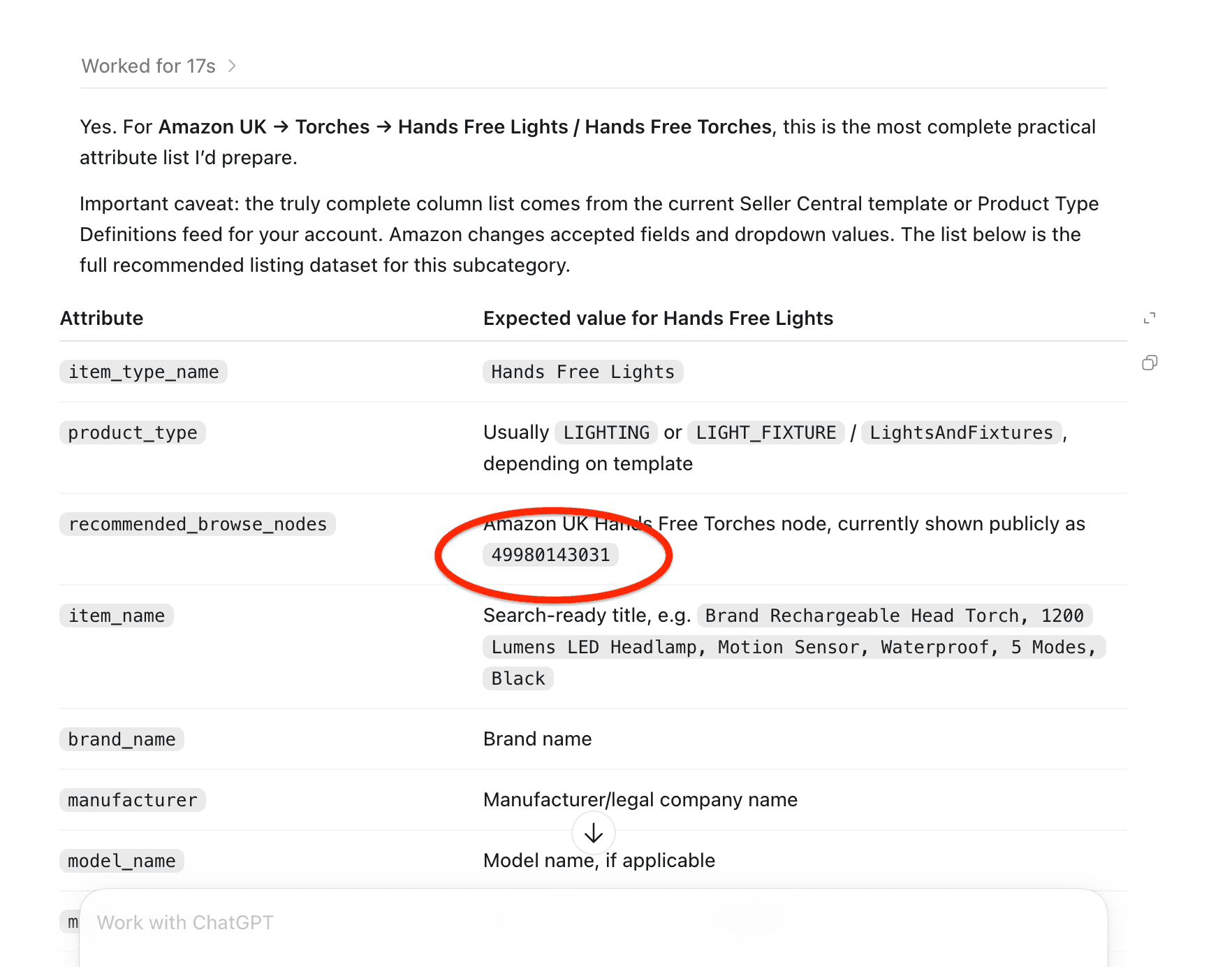
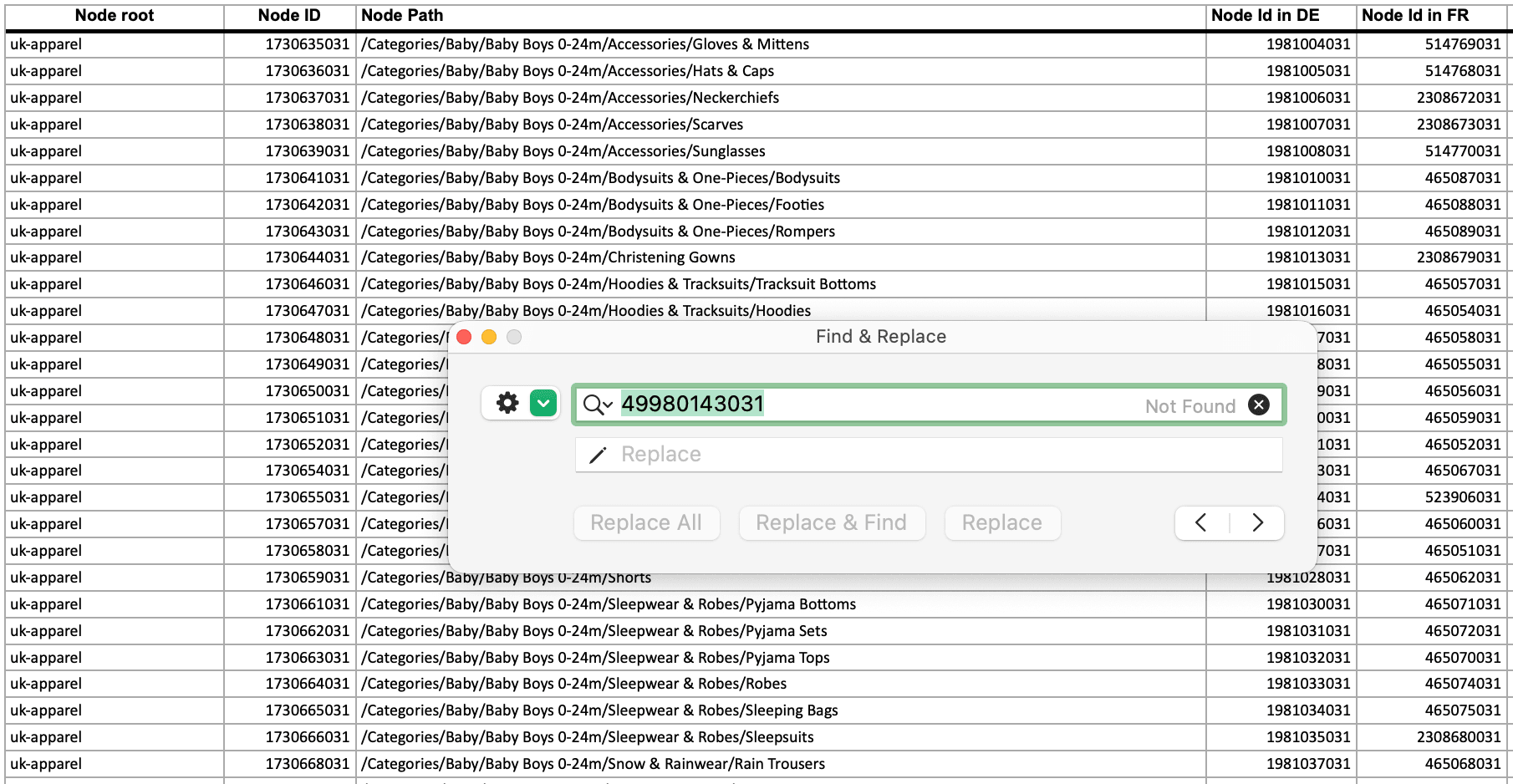
We asked ChatGPT for the attributes on a Hands Free Lights listing. It returned recommended browse node 49980143031, described as "currently shown publicly." That node does not exist in Amazon UK.
The answer was not hedged. It was a specific eleven-digit number presented alongside otherwise sensible advice. Paste it into a flat file and you would be debugging the rejection rather than questioning the source. That is the shape of the problem: the output looks the same whether the model knows or not.
Then look at the scale of the list.
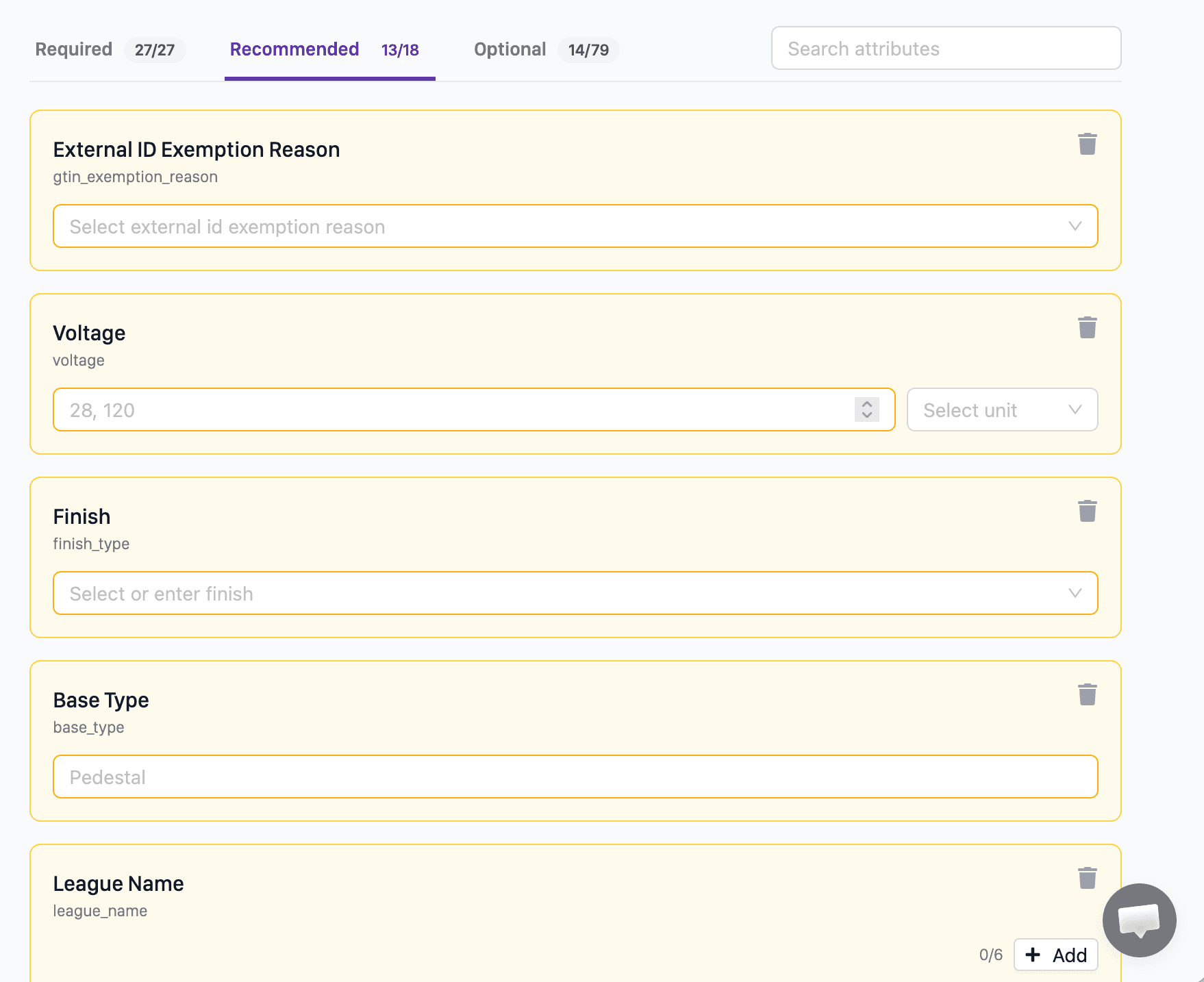
Amazon's actual schema for this category contains 27 required and 18 recommended attributes: 45 fields. ChatGPT returned around 70. More than two dozen suggestions did not exist in this category's schema, including material, shape, light colour, wattage, battery capacity, charging time, connector type, switch style, beam angle, mounting type, water resistance level, target audience, and occasion type.
A plausible superset is not usable. To act on 70 suggested fields, you must check all 70 against Amazon's real schema. You end up doing the research anyway, with extra rows to disprove.
It also missed fields with consequences: Dangerous Goods Regulations for a lithium-battery product; the package hierarchy fields; and Is Fragile, Power Plug Type, Colour Map, and Product Subcategory. It returned one flat list without distinguishing required fields from recommended ones.
The response contained at least 15 hedges such as "if applicable," "if known," "if field exists," and "depending on template." Those caveats read as thoroughness while handing verification back to the seller.
It gets plenty right. In the same answer, ChatGPT correctly named external product ID, country of origin, number of items, package dimensions and weight, energy efficiency class, control method, voltage, finish type and colour temperature. It is not useless. It is approximate; Amazon's flat files are not.
To be clear about the alternative: you can get the real fields for free. Download Amazon's category template and the exact schema is sitting in the header row. No model required, no guessing. If your catalog is small, that's what you should do.
What neither the template nor ChatGPT does is fill it in. The template tells you there are 27 required fields for this category; it doesn't find the values, doesn't cover the other categories you sell in, and doesn't do any of it five hundred times.
Perci reads the schema from Amazon's API, including the exact fields for that category, the values Amazon accepts, and whether each is required or recommended, then fills them across the catalog. The schema was never the expensive part. The filling is.
It does not maintain Perci's restricted-phrase bank
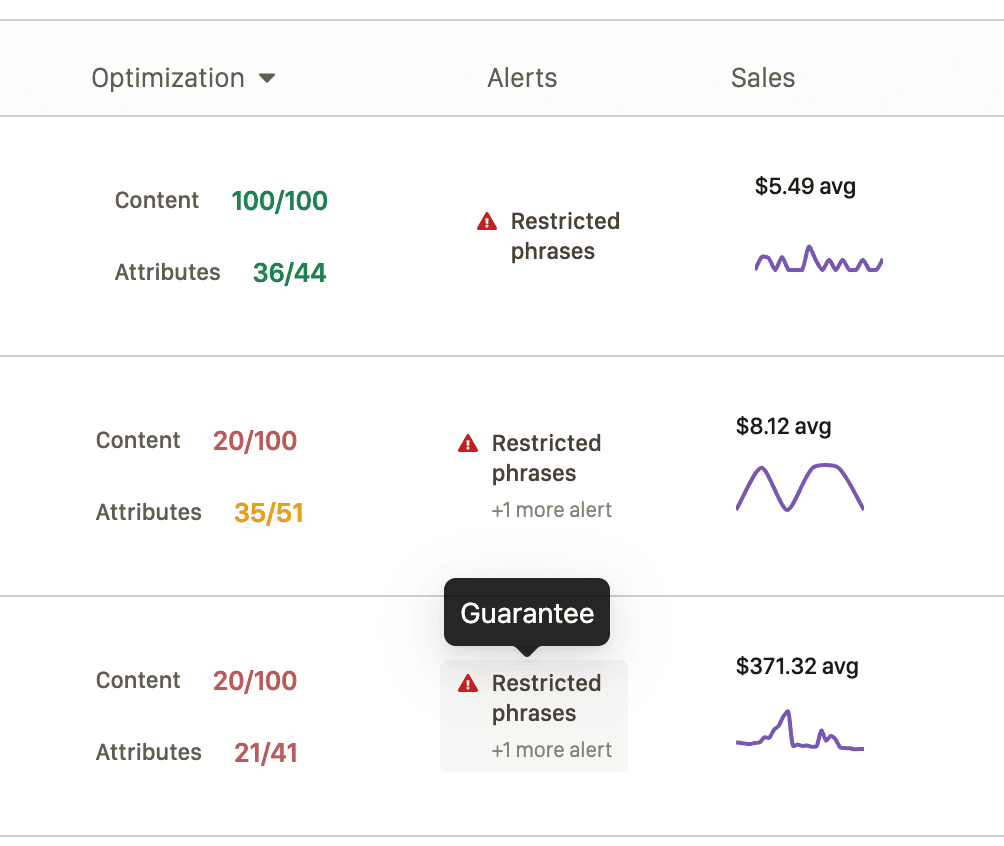
Perci maintains a curated bank of restricted and caution phrases based on the wording Amazon investigates or suppresses. ChatGPT can follow a policy list you provide, but a general conversation does not include Perci's maintained bank or its update process.
It does not bring the Amazon workflow with it
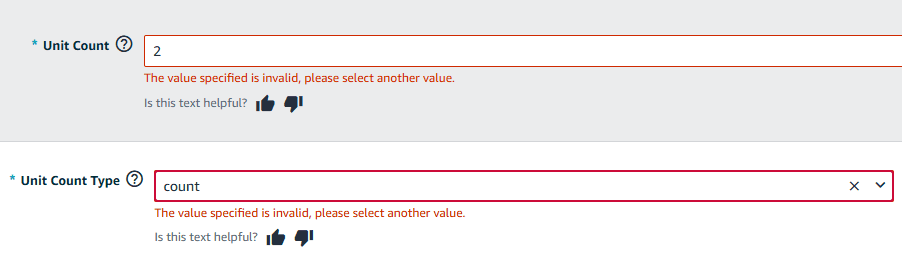
ChatGPT supports file uploads, data analysis, and connected or custom apps. But without an Amazon-specific integration, you still assemble current listings, competitor research, SQP data, and category templates; then upload flat files, read error reports, and fix rejected rows.
The copy inside the cells gets better. The process surrounding those cells remains yours to build and maintain.
Section 3
Where doing it yourself is genuinely the right call
If you have less than 10 listings, use ChatGPT.
Write the copy with AI. Pull keywords from Search Query Performance or a keyword tool rather than asking ChatGPT to invent them. Fill the attributes from Amazon's category template and upload the result manually. It works, it can cost nothing beyond your time, and buying specialized software may be overhead at that size.
The tradeoff is not copy quality. It is time per listing multiplied by listings.
Section 4
Where the arithmetic flips
Doing it yourself, per listing:
- 30 minutes
- Assemble current listing, competitor, and keyword inputs
- 5 minutes
- Prompt and edit the listing copy
- 25 minutes
- Find and fill the category's attributes
- 25 minutes
- Build flat files and fix upload errors
Perci: approximately 45 seconds per listing, with up to about 500 listings in a run.
At 10 listings, the difference is an afternoon. At 200, it is the difference between a week of work and a coffee break. At 1,000, doing it by hand is not a plan.
Check your own listings free →One credit. No card.
Section 5
Frequently asked questions
Isn't Perci just ChatGPT with a wrapper?
The copy generation is AI, and we do not pretend otherwise. What surrounds it is not: real competitor and keyword data, Amazon's live category schemas, our maintained restricted-phrase bank, variation-family structuring, and direct publishing with confirmation. If copy were the whole job, you would not need Perci. That is why this page spends most of its length on everything that is not the copy.
If ChatGPT doesn't know the schema, can't I download Amazon's category template?
Yes. The category template contains the real fields, it is free, and it is the right answer for a small catalog. What it gives you is which fields exist. It does not find the correct value for every field on every SKU, handle a separate template for every category, or remove the upload, error-report, and repair loop. ChatGPT cannot reliably supply the fields by itself, and the template can, but neither fills them across a catalog. That is the part Perci handles.
What if AI gets good enough to do all of this?
The parts that are genuinely language work will keep getting easier. Reading Amazon's live category schema and knowing which phrases trigger investigations are access and maintenance problems. A stronger model can use those systems when connected to them, but it does not remove the need for the systems themselves.
Do I need to connect my Amazon account?
No. Perci can work from an ASIN alone. Connecting your account gives Perci access to your existing backend attributes and enables direct publishing.